Booking choice: The private food and wine walk, from $129 per person. Check dates Compare the options below
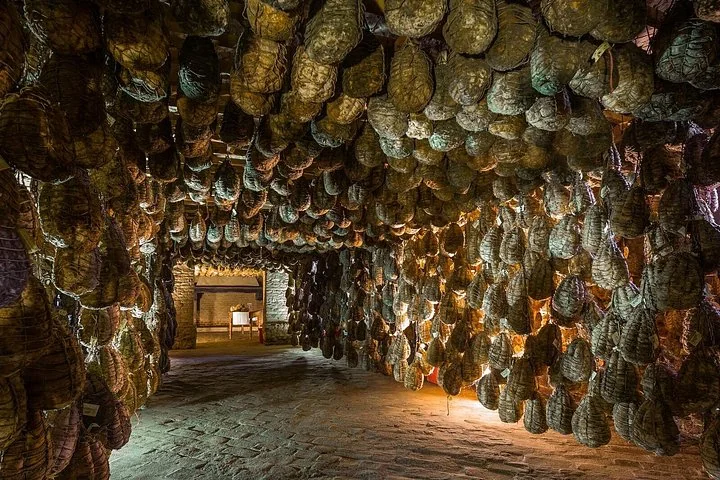
Culatello di Zibello is a PDO cured meat from the Bassa Parmense, the flat farmland between Parma and the river Po. It is the boneless heart of the pork thigh, stuffed into a natural casing, tied into a pear shape and aged for at least 10 months in damp lowland cellars.
This guide covers what it is, how it is made, what the rules say, where the seven production towns are, how to eat and buy it, and the easiest places to taste it on a trip to Parma.
The quick answer
Culatello di Zibello is the prized inner muscle of the pork thigh, boned, seasoned with salt, pepper and garlic, cased in the pig's bladder, tied with string and aged at least 10 months. It is made only in seven towns along the Po north-west of Parma. The easiest way to taste it is on a Parma food walk, where it is on the cold-cut board; to see it hanging in a cellar, go to the Bassa with a tour or visit the Museo del Culatello.
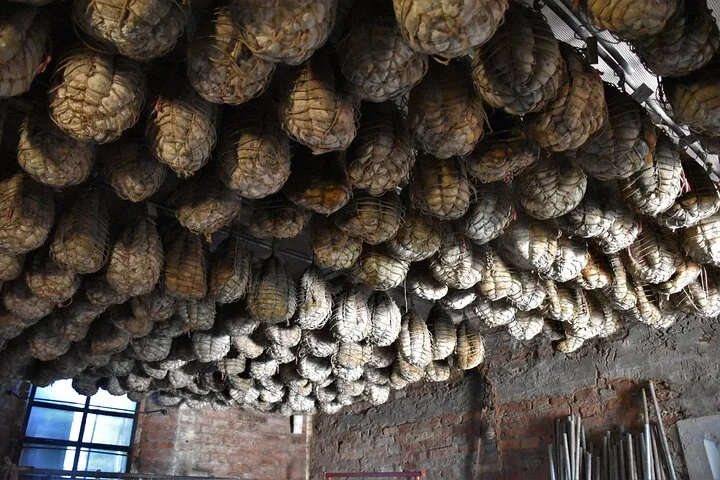
What is Culatello di Zibello?
A PDO cured meat made from the boneless inner muscle of the pork thigh, often called the king of Italian salumi, and first recorded in a Parma document of 1735.
Prosciutto uses the whole leg on the bone. Culatello takes only the round, lean heart of it, the best-protected part of the thigh, and cures it on its own. The trimmings from the same leg are not wasted: they become fiocchetto, a smaller, cheaper cousin. The EU has protected the name Culatello di Zibello since 1996, and the producers' consortium counts 20 registered makers.
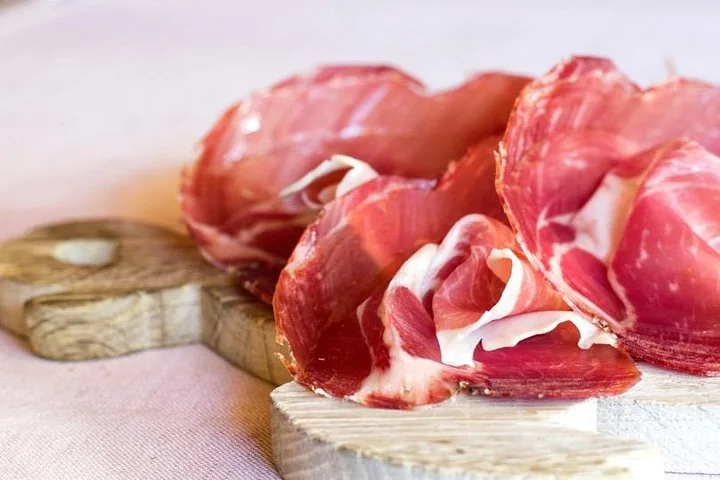
How is culatello made?
By hand, in five steps: trimming and boning the thigh, seasoning, casing in bladder, tying with string, then drying and aging for at least 10 months.
- Trimming: the inner muscle is cut from the thigh and boned; the rest becomes fiocchetto.
- Seasoning: salt, pepper and garlic, sometimes a splash of dry white wine.
- Casing: the meat is stuffed into a natural casing, usually the pig's bladder.
- Tying: string is wound tightly round it to give the pear shape.
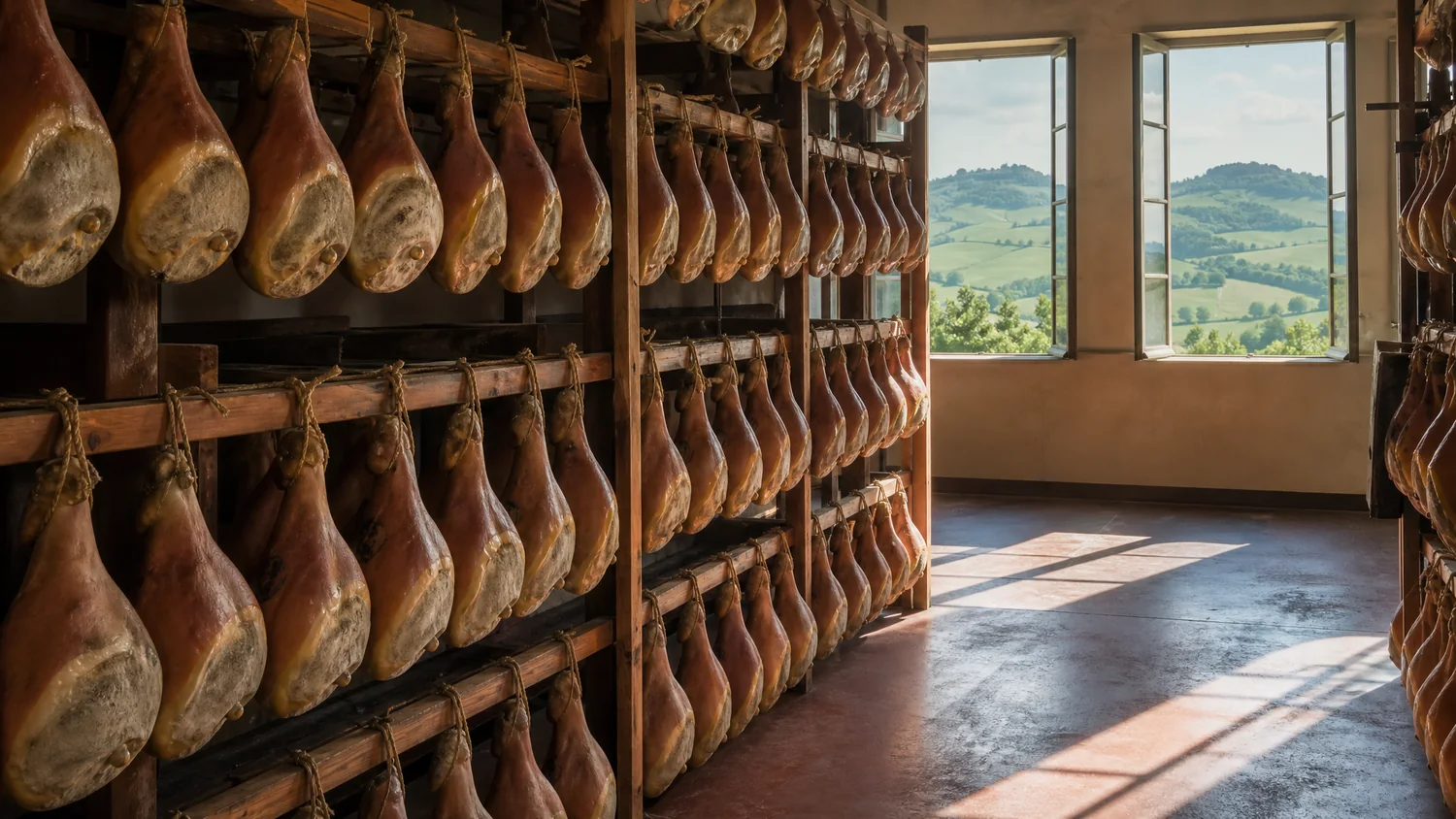
- Aging: the pieces hang in cellars where the damp winters and hot summers of the Po plain do the work. Traditionally culatello is made from October to February, in the fog.
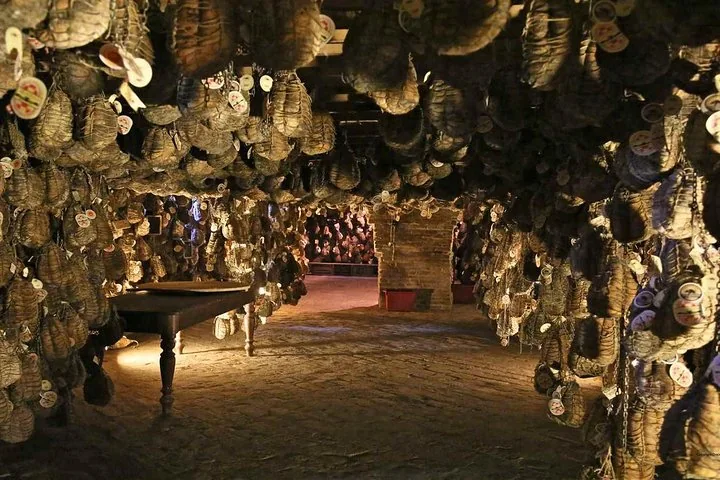
See the cellars and taste it where it is made, on a private half day in the Bassa.
Check dates for the culatello country half dayWhat do the PDO rules say?
Only seven towns, only the heart of the thigh, a natural casing, at least 10 months of aging, and since 2025 a little less salt and slightly heavier pieces.
The production rules were changed for the first time in 2025. The main points a visitor will hear about:
| Rule | What it means |
|---|---|
| Where | Only seven municipalities along the Po in the province of Parma |
| Cut | The boneless inner muscle of the pork thigh |
| Pigs | Heavy pigs raised in Emilia-Romagna and Lombardy |
| Casing | A natural casing, usually the pig's bladder, tied with string |
| Minimum aging | 10 months before it can be branded |
| Weight when branded | Up to 6 kg (the limit was 5 kg before 2025) |
| Salt | Minimum lowered from 3.4% to 2.8% in 2025 |
| Output | 82,570 pieces branded in 2025, from 20 producers |
Which are the seven culatello towns?
Busseto, Colorno, Polesine Zibello, Roccabianca, San Secondo Parmense, Sissa Trecasali and Soragna, roughly 40 km north-west of Parma.
Zibello, the village in the name, is now part of Polesine Zibello, where the Museo del Culatello sits in a riverside farm estate. Busseto is Giuseppe Verdi's town, Soragna has a cheese cooperative and a castle, and Roccabianca a castle of its own. There is no practical public transport between them, so you need a car or a tour. A day plan is in visiting culatello country.
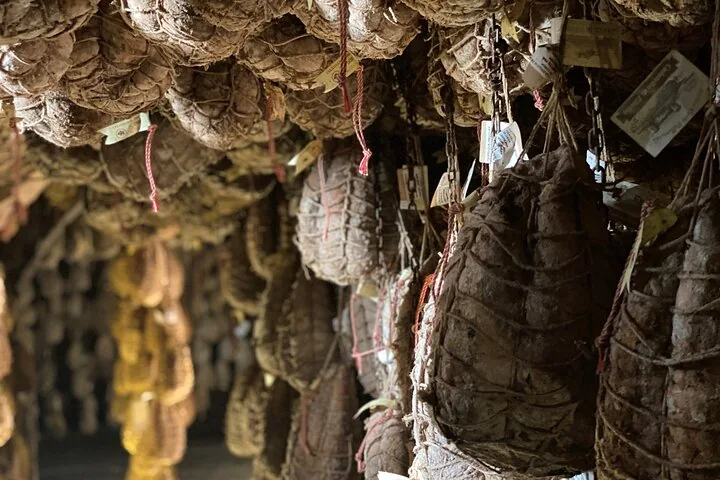
Want to see the towns without driving? The private half day passes San Secondo, the Roccabianca castle and Zibello, then spends almost three hours with a farm producer at Polesine.
Explore the culatello country half dayHow long is culatello aged?
At least 10 months by law, but most is sold at around 20 months, and some producers age it for 36 to 48 months.
The long aging is the point. Culatello is lean, so it relies on slow drying in humid air rather than a thick layer of fat, and the lowland cellars give it that: damp, foggy winters and hot summers. When you taste, ask how old the piece is; guides and producers expect the question.
How do you eat culatello?
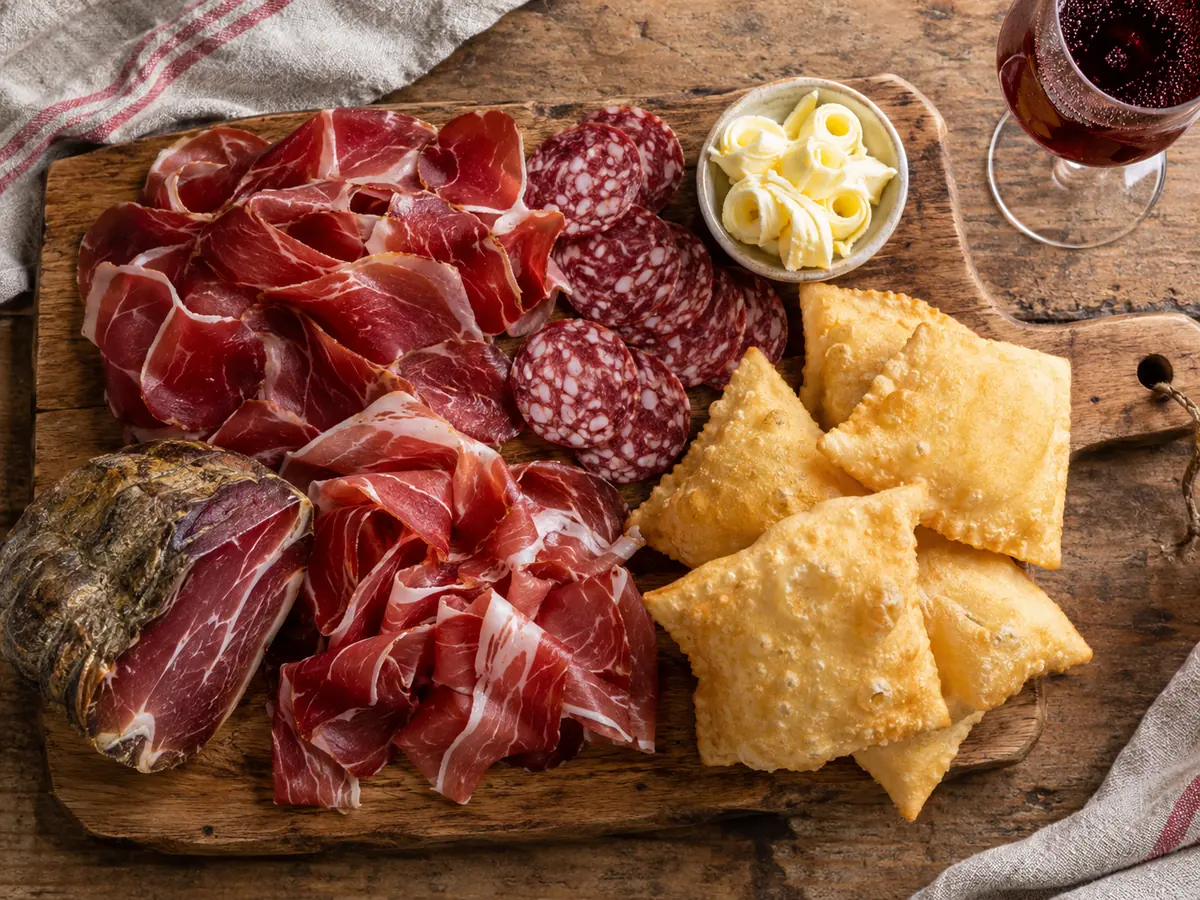
Sliced very thin, on its own or with bread and butter or torta fritta, and a glass of dry sparkling red.
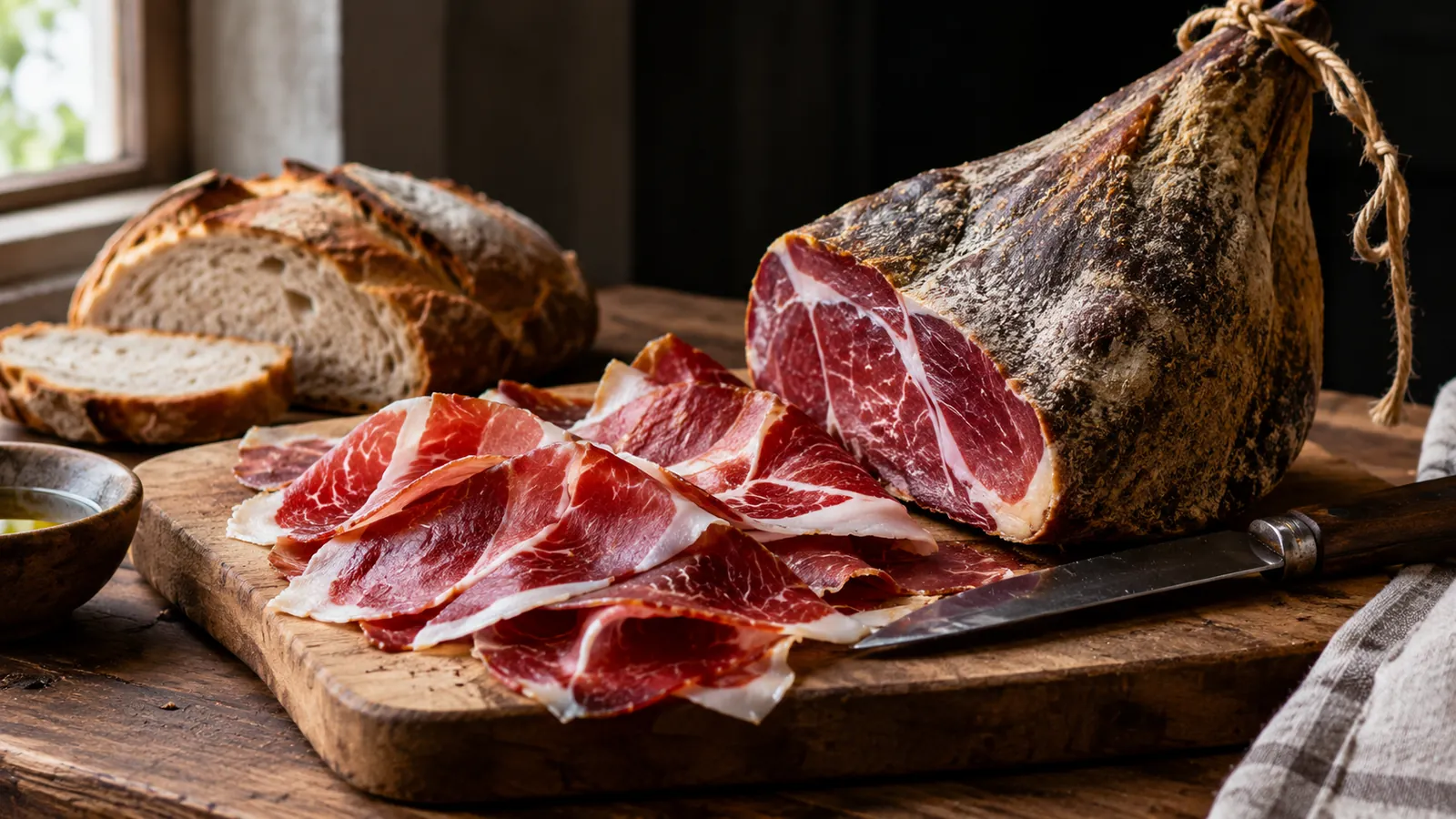
Culatello is too good to cook: it is eaten as it is, cut paper-thin just before serving. In the Parma area it comes with bread, often with a curl of butter, or with torta fritta, puffs of fried dough. The local pairing is a dry sparkling red, usually Lambrusco, or Fortana from the Po. On a board, it is the deep red, round slice with no rind.
Where can you taste culatello?
On a Parma food walk, at a $25 curing-room tasting just west of Parma, at the Museo del Culatello, or on one of the few tours to a producer.
The private food and wine walk ($129, rated 5.0 from 651 reviews) and the shared two-hour tasting ($74) both put Culatello di Zibello on the cold-cut board next to Prosciutto di Parma. The one-hour curing-room tasting ($25) sets culatello, prosciutto and culatta side by side. Every option, including the producer days, is compared in culatello tours.
Culatello on the board, with Parmigiano, pasta and wine, on a private walk rated 5.0.
Check dates for the private food and wine walkCan you buy culatello and take it home?
Yes, from producers, the museum shop and delis in Parma, sliced and vacuum-packed or as a whole piece; check your home country's import rules first.
Pre-sliced packs have taken off: they made up 41.5% of production in 2025, up from 4.6% ten years earlier, so a sealed pack is easy to find and to carry. A whole culatello needs a cool place and a good slicer. Before you buy, check the rules at home: many countries outside the EU, including the United States, restrict or ban travellers bringing in cured meat. If you cannot take it home, taste it here: the $25 tasting is the cheapest way.
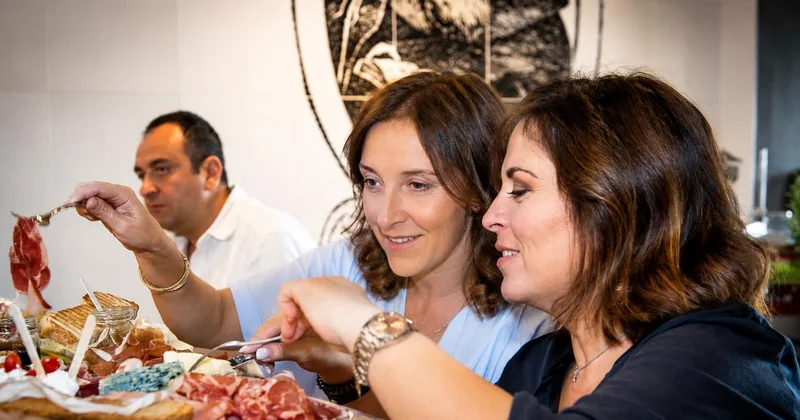
Try it before you buy: culatello, prosciutto and culatta side by side in a curing room, with bread and a glass of wine.
Explore the $25 culatello tastingFrequently asked questions
When is the best time to taste culatello in the Bassa?
November, when November Porc brings pork and culatello fairs to four villages on successive weekends: in 2026 Sissa 6 to 8, Polesine Parmense 13 to 15, Zibello 20 to 22 and Roccabianca 27 to 29 November. Avoid January if you want the Museo del Culatello, which closes for the month.
Is culatello cooked?
No. Like prosciutto, it is a raw cured meat: salted, seasoned, dried and aged for at least 10 months, then sliced thin and eaten as it is.
What is fiocchetto?
The smaller cured meat made from the trimmings of the same pork thigh after the culatello has been cut out. It is milder and cheaper.
How much culatello is made each year?
The consortium branded 82,570 pieces in 2025, from 20 producers. Each one is tied and aged by hand.
Ready to book
Choose your tasting
Free cancellation up to 24 hours before on every option. Prices are from-prices in USD and move with the season.
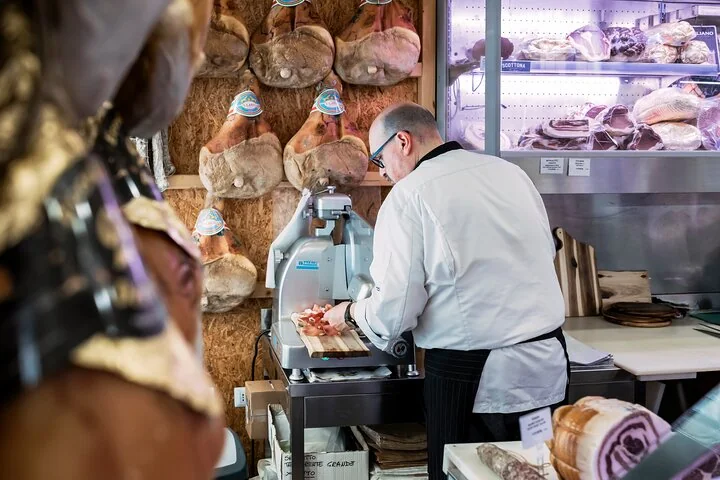
Parma Private Food and Wine Walking Tour
- Private local guide, start at Caffè San Pietro, Piazza Garibaldi
- Cold-cut board with Culatello di Zibello, Prosciutto di Parma, culaccia, coppa, salame
- Three ages of Parmigiano Reggiano, two fresh pastas, pastries and gelato
A Taste of Parma: Parmigiano, Culatello & Wine
A shared two-hour city tasting with culatello
Culatello Country: Po Lowlands Half Day
- Private local guide and admission
- Hotel pickup within 15 km of Parma (or follow the guide in your own car)
- Tasting of PDO Culatello di Zibello, coppa, pancetta and salami